- SEO
What is SEO?
Learn what SEO is, how it works and why it matters in 2026, from keywords and technical SEO to local search, spam policies and AI Overviews.
 AuthorRehmat Ullah6 min readUpdated
Table of Contents
Most people find a business the same way: they search. Whether they want a tailor in Lahore, a laptop on Daraz, or a software house in Khyber Pakhtunkhwa, they type a query and pick from the results. Search Engine Optimization (SEO) is how you earn a place in those results without paying for each click.
So what exactly is SEO, and how does it work in 2026? In this guide, we cover the fundamentals, how a modern results page looks, why SEO matters, and the practical steps you can take to improve your website's visibility.
What is SEO?
SEO stands for Search Engine Optimization. It is the process of improving your website so it ranks higher in unpaid (organic) results on search engines like Google and Bing. Yahoo's web results are closely tied to Bing: Yahoo asks site owners to submit their sites through Bing Webmaster Tools.
SEO combines on-page, off-page, technical and local work. The goal is simple: make your pages easy for search engines to understand and genuinely useful for the people who land on them.
What a Google Results Page Looks Like Today
A search results page is no longer a plain list of ten blue links. Depending on the query, Google can show several blocks, and each is won in a different way.
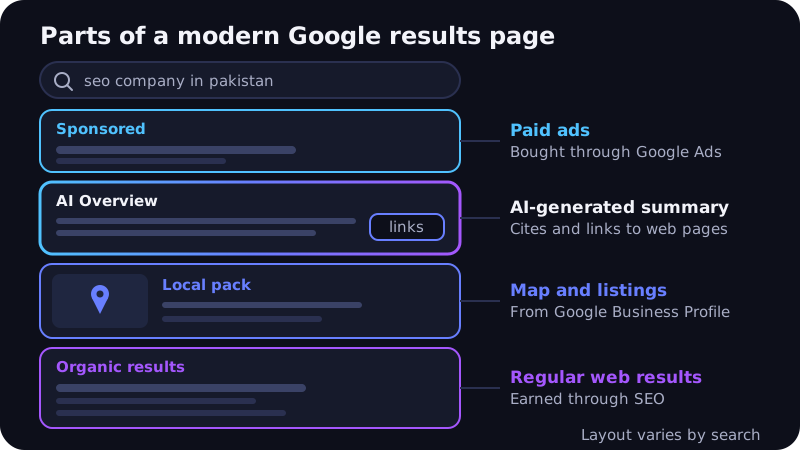
- Sponsored results: Paid ads, bought through Google Ads. You pay when someone clicks.
- AI Overview: An AI-generated summary with links to the pages it draws from.
- Local pack: A map with nearby businesses, pulled from Google Business Profile listings.
- Organic results: The regular web results. This is the core of SEO.
How Does SEO Work?
1. Keyword Research:
- Find the words and phrases your customers use when they search for your products or services. Tools like Google Keyword Planner, Semrush and Ahrefs show search volume and competition. In Pakistan, also check Urdu and Roman Urdu phrasing if your customers search that way.
2. On-Page SEO:
- This involves optimizing the content and HTML of your pages. Key elements of on-page SEO include:
- Title Tags: Clear, descriptive titles that include the main topic of the page.
- Meta Descriptions: Short summaries that encourage people to click. Google may rewrite them, but a good one still helps.
- Headings: Header tags (H1, H2, H3) that structure your content and make it easy to scan.
- URL Structure: Clean, readable URLs that describe the page.
- Internal Linking: Links between your own pages that help visitors and crawlers find related content.
- Content Optimization: Content that answers the searcher's question fully, with original insight rather than repeated keywords.
3. Off-Page SEO:
- This covers activity outside your website that affects how it is seen. Key elements of off-page SEO include:
- Backlinks: Links from other reputable websites. Relevant, editorial links act as signals that your content is worth referencing.
- Social Media Engagement: Sharing content on social platforms to reach people who may read, share and link to it.
- Guest Blogging: Writing useful articles for other sites in your industry to reach new audiences. Links placed mainly for ranking should be marked
rel="nofollow"orrel="sponsored", per Google's spam policies.
4. Technical SEO:
- This makes sure search engines can crawl, render and index your site. Key elements of technical SEO include:
- Site Speed: Fast, responsive pages. Google's Core Web Vitals measure loading (LCP), responsiveness (INP) and visual stability (CLS).
- Mobile-Friendliness: A site that works well on phones. Google mainly uses the mobile version of your pages for indexing.
- XML Sitemaps: Files that list your important URLs so search engines can discover them.
- Robots.txt: A file that tells crawlers which parts of your site they may crawl. It controls crawling, not indexing; use a
noindextag to keep a page out of search results.
5. Local SEO:
- Helping your business show up for nearby searches, such as "mobile repair near me". Key elements of local SEO include:
- Google Business Profile: Claim and complete your listing. Google My Business was renamed Google Business Profile in November 2021.
- Local Citations: Keep your business name, address and phone number consistent across directories and social profiles.
- Reviews and Ratings: Ask real customers for honest Google reviews. Google says local ranking is based on relevance, distance and prominence, that more reviews and positive ratings can help, and that you cannot pay for a better local ranking.
AI Overviews, AI Mode and SEO
Google launched AI Overviews in May 2024. Since May 2025 they have been available in 200+ countries and territories and 40+ languages, including Urdu. AI Mode, a conversational search experience, is also available in Pakistan with Urdu support.
What does this mean for SEO? The fundamentals still apply. AI answers draw on pages from Google's index, so crawlable, clear and trustworthy content remains the way in. Answer common questions directly, keep facts current, and show real expertise. Track clicks and conversions, not just rankings, because some searches are now answered on the results page itself.
Spam Policies to Know
In March 2024, Google folded its helpful content system into core ranking and added three spam policies:
- Scaled content abuse: Mass-producing pages mainly to rank, including with AI, without adding value.
- Site reputation abuse: Placing third-party content on a trusted site mainly to exploit its ranking signals.
- Expired domain abuse: Buying old domains to rank low-value content on their past reputation.
Shortcuts like these can lead to lower rankings or removal from results. See our guide to black hat SEO for more.
Why SEO is Important & Benefits of SEO
1. Increased Organic Traffic:
- Ranking higher for relevant searches brings more organic (non-paid) visitors who are already looking for what you offer.
2. Cost-Effective Marketing:
- Unlike ads, you don't pay per click. SEO takes time and effort up front, but good pages can keep bringing visitors for months or years.
3. Enhanced User Experience:
- SEO work improves structure, speed and content, which makes your site easier and more pleasant to use.
4. Brand Credibility and Authority:
- Appearing consistently for useful searches, and being cited in AI answers, builds familiarity and trust with your audience.
5. Competitive Advantage:
- A steady SEO plan helps you win searches your competitors ignore, especially long, specific queries and local searches.
6. Realistic Timelines:
- SEO is not instant. Google has said that in most cases SEOs need four months to a year to implement improvements and see potential benefit. Read more in how long does SEO take to work.
Conclusion
SEO helps the right people find your business when they search. It covers keywords, content, links, technical health and local presence.
The results page has changed, with AI Overviews and new spam policies, but the core idea hasn't: build helpful, trustworthy pages for people. Whether you're a small shop or a large company, that effort keeps paying back.
Elevate Your Online Presence with Expert SEO Services!
Want more customers to find you on Google? Softhat IT Solutions plans and delivers SEO for businesses across Pakistan, from technical fixes and content to local search and link building.
See what's included in our SEO services, or book a free strategy call to discuss your goals.