
- Digital Marketing
- SEO
How Long Does SEO Take to Work & Why Does SEO Take So Long?
How long does SEO take? Google says four months to a year in most cases. Learn what affects the timeline, including core updates and AI Overviews.
 AuthorRehmat Ullah5 min readUpdated
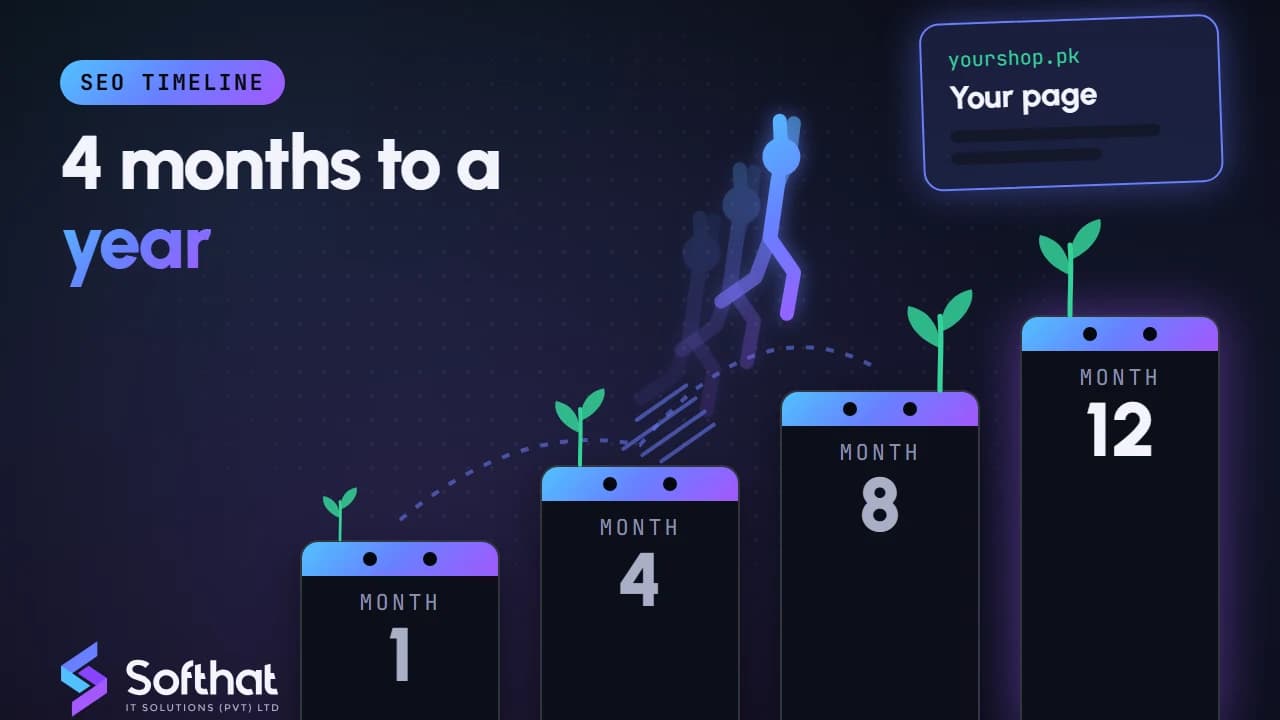
Table of Contents
SEO (Search Engine Optimization) is one of the most reliable long-term sources of customers. But almost every business owner asks the same two questions: "How long does SEO take to work?" and "Why does it take so long?"
Realistic expectations make SEO easier to plan and budget for. In this article, we share what Google itself says about SEO timelines, explain the factors that speed things up or slow them down, and cover how AI search features change what "working" means.
How Long Does SEO Take to Work?
The most useful benchmark comes from Google. In its "How to hire an SEO" video, Google's Maile Ohye explains that in most cases SEOs need four months to a year to help a business first implement improvements and then see potential benefit (Google Search Central).
Google's SEO Starter Guide adds that "some changes might take effect in a few hours, others could take several months" (Google Search Central). Here is how that usually plays out in phases:
1. Early Signs (First Few Months):
- This phase is about fixing foundations: technical issues, indexing, page titles and your most important pages. You may see early signs such as more pages indexed, more impressions in Google Search Console, and better positions for specific long-tail or branded searches. Google suggests waiting a few weeks after a change before judging its effect.
2. Meaningful Results (Four Months to a Year):
- This is the window Google points to for seeing real benefit. As content grows and your reputation builds, rankings for more valuable keywords, organic traffic and enquiries typically start to rise. Where you land within this range depends on competition, your starting point and how consistently the work is done.
3. Ongoing Improvements (Beyond One Year):
- SEO keeps compounding. Content, links and reviews you build continue to work, but competitors and search engines keep changing too. Ongoing effort protects and grows the gains.
What speeds up or slows down SEO results
- Website age and history: A new domain usually starts slower than an established site with existing links and content. See what is the Google Sandbox for more on new sites.
- Competition: Ranking for "bakery in DHA Lahore" is very different from ranking for "online shopping Pakistan".
- Starting problems: Sites with indexing errors, penalties or a hacked history need clean-up before growth.
- Local vs national targeting: Local SEO with a strong Google Business Profile can show results sooner than nationwide campaigns.
- Consistency and resources: Regular content, fixes and outreach move faster than occasional bursts of work.
- Development speed: Recommendations only help once they are implemented. Slow website changes often delay results more than Google does.
Why Does SEO Take So Long?
1. Search Engine Algorithms: Google has to recrawl your pages, process changes and compare them with every competing page. Its systems also reward sites that show trust and helpfulness over time, and that can't be rushed.
2. Competition: In competitive industries, many businesses target the same keywords and keep improving. You need consistent work to overtake them.
3. Content Creation and Optimization: Helpful content takes research, writing and editing. After publishing, search engines still need time to index and evaluate it.
4. Backlink Building: Earning quality backlinks depends on relationships, outreach and content worth linking to. Shortcuts like buying links break Google's spam policies and can set you back.
5. Technical SEO: Improving speed, Core Web Vitals, mobile experience and crawl errors takes development time, and Google needs to recrawl pages to see the fixes.
6. Core and Spam Updates: Google regularly changes how it ranks results. Since 2024 it has run core updates in March, August, November and December 2024; March, June and December 2025; and March and May 2026, plus several spam updates (Google Search Status Dashboard). Rankings can move during an update, so judge progress over months, not days.
7. Regular Monitoring and Adjustments: SEO is not a one-time task. Results come from measuring, learning and refining over time.
How AI Overviews change the timeline and how you measure it
Google's AI Overviews launched in May 2024 and, since May 2025, are available in 200+ countries and territories and 40+ languages, including Urdu. AI Mode is also available in Pakistan (Google).
This doesn't make SEO faster or slower by itself, but it changes what progress looks like. Some searchers now get an answer without clicking. So rankings and clicks alone may understate your results.
Track a wider set of signals: impressions in Search Console, branded searches, calls, WhatsApp enquiries, form leads and sales. These show whether SEO is working for the business, not just for a keyword report.
Red flags: promises of instant results
Be careful with anyone who guarantees fast, fixed rankings. Google warns that "no one can guarantee a #1 ranking on Google" and advises caution with SEOs who claim a special relationship with Google (Google Search Central). Quick wins built on spam tactics usually disappear, sometimes along with your existing rankings.
Conclusion on How Long Does SEO Take to Work & Why Does SEO Take So Long
SEO is a long-term investment. Google itself says it usually takes four months to a year to implement improvements and see potential benefit. Early signs can appear sooner, and results keep compounding with consistent work.
Set realistic goals, measure leads as well as rankings, and expect some movement during Google updates.
Accelerate Your SEO Success with Expert Help
Want a realistic SEO plan with clear milestones? Softhat IT Solutions builds SEO strategies for businesses across Pakistan and reports progress in terms of leads, not just rankings.
Explore our SEO services or book a free strategy call to discuss your timeline.