
- Content Writing
- Digital Marketing
- SEO
What is Dwell Time & Does it Matter for SEO?
What dwell time is, what Google has actually said about it, how to measure engagement in GA4, and practical ways to keep visitors reading.
 AuthorRehmat Ullah4 min readUpdated
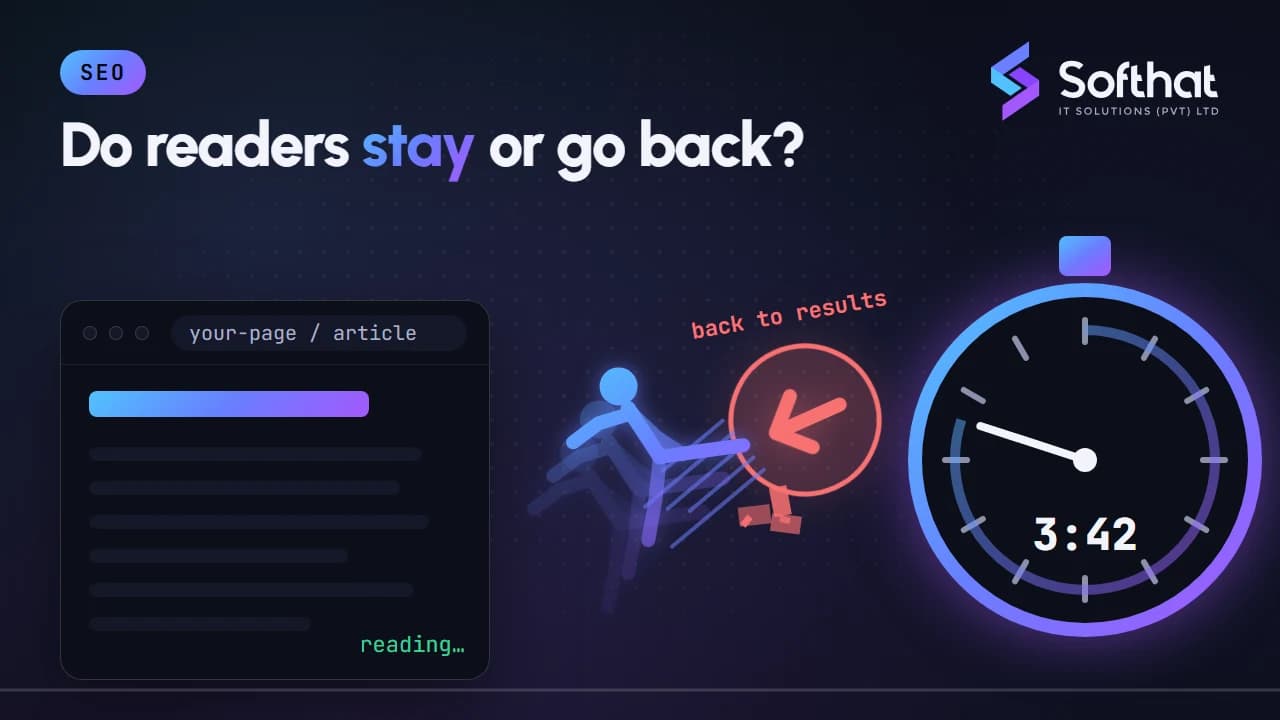
Table of Contents
In search engine optimization (SEO), understanding how people behave on your pages helps you improve them. One metric that comes up often is dwell time, and it is surrounded by a lot of confident claims.
In this article, we explain what dwell time is, what Google has and hasn't said about it, how you can measure related engagement in Google Analytics 4, and practical ways to keep visitors reading.
What is Dwell Time?
1. Definition: Dwell time is the amount of time a user spends on a webpage after clicking a search result and before returning to the search engine results page (SERP). It is a term used in the SEO industry; it is not a metric Google reports in Search Console or Google Analytics.
2. Importance: Dwell time can hint at user satisfaction. A longer visit may suggest the content was useful. A very short one may mean the page didn't meet expectations, although it can also mean the visitor found a quick answer, such as a phone number or opening hours, and left happy.
How Dwell Time Impacts SEO
1. What Google Has Confirmed: Google has not confirmed dwell time as a ranking signal. What it does say is that it uses "aggregated and anonymized interaction data to assess whether search results are relevant to queries". That is a broad statement, and it does not name dwell time or any specific time threshold.
2. Indirect SEO Benefits: Whether or not dwell time is measured directly, the things that increase it are the same things Google's systems aim to reward: helpful, relevant, people-first content. Improving it is worthwhile because it usually means your page serves visitors better.
3. Content Quality Assessment: Treat dwell time as your own quality check rather than a number to game. If people leave a page quickly, ask whether the title promised something the content didn't deliver.
4. Reducing Pogo-Sticking: Pogo-sticking is when users click a result, return to the SERP quickly, and click another result. It often signals that the first page didn't answer the question. Pages that meet search intent clearly reduce this behavior.
5. Don't Game It: Tricks like hiding the answer at the bottom, splitting articles across pages, or adding filler to slow readers down frustrate visitors. They don't make content more helpful and can hurt trust with your audience.
How to Measure Engagement in GA4
You can't see dwell time directly, but Google Analytics 4 (GA4) gives you useful engagement metrics. Universal Analytics has been replaced by GA4, which measures engagement differently.
- Engaged session: In GA4, a session counts as engaged when it lasts longer than 10 seconds, has a key event, or has 2 or more page or screen views.
- Engagement rate: The percentage of sessions that were engaged. Its inverse is GA4's bounce rate.
- Average engagement time: Based on the time your web page was in focus in the visitor's browser, which is a closer, more practical view of attention than raw time on page.
Keep in mind these metrics cover all traffic sources, not just Google Search. To look at search visitors only, filter your GA4 report by the organic search channel, and use Google Search Console for queries and clicks.
Strategies to Improve Dwell Time
1. Create High-Quality Content: Produce well-researched, informative, and engaging content that answers the query fully. Add your own examples and experience, which readers can't find everywhere else.
2. Answer the Question Early: Give the key answer near the top, then go deeper. Readers who see their answer straight away are more likely to trust the page and keep reading for detail.
3. Improve Readability and User Experience: Use clear headings, short paragraphs, bullet points, and visuals. A page that is easy to scan keeps people reading longer.
4. Optimize Page Load Speed: Make sure your pages load quickly, especially on mobile data. Use Google PageSpeed Insights to find issues and check your Core Web Vitals.
5. Use Engaging Media: Add images, videos, infographics, and interactive elements where they help explain the topic, not just to decorate.
6. Provide Clear and Relevant Internal Links: Link to related content so readers can continue learning. See our guide on how internal linking helps SEO.
7. Address User Intent: Match your content to what the searcher wants: a quick definition, a step-by-step guide, a price comparison, or a product to buy.
8. Optimize for Mobile Users: Many of your visitors will arrive on a phone, often on mobile data, so a responsive design, readable fonts, and tap-friendly buttons matter. Avoid pop-ups that cover the content on small screens.
Conclusion on What is Dwell Time & Does it Matter for SEO
Dwell time is a useful idea, but Google has not confirmed it as a ranking signal, so don't chase it as a number. Use GA4's engagement rate and average engagement time to spot pages that disappoint visitors. Then fix the cause: unclear answers, slow loading, or content that doesn't match intent. Better pages tend to earn better results.
Engage Your Audience with Exceptional Content
Softhat IT Solutions writes clear, useful content that answers your customers' questions and keeps them reading. Explore our content writing services to improve engagement on your key pages.
Want to know which pages to fix first? Book a free strategy call and we will review your engagement data with you.