
- Google Ads & PPC
Performance Max Campaigns: How They Work and When to Use Them
Performance Max campaigns explained: how asset groups, signals and bidding work, the new controls and reports, and when PMax suits a Pakistani business.
 AuthorRehmat Ullah7 min read
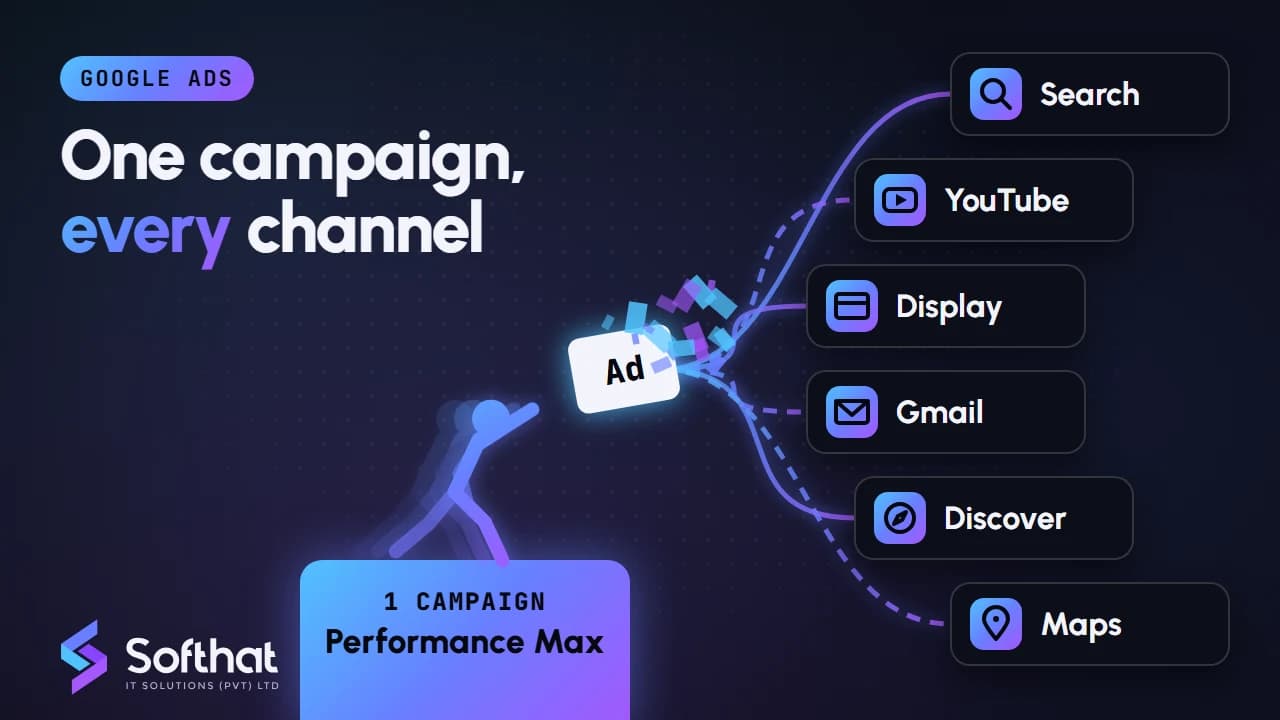
Table of Contents
Performance Max campaigns promise something tempting: one campaign, all of Google's ad channels, and AI that finds customers for you. For a busy business owner, that sounds like the perfect shortcut.
Sometimes it is. Sometimes it quietly spends your budget on low-quality placements or on people who were already searching for your brand name.
This guide explains how Performance Max (PMax) campaigns work in late 2026, the controls and reports Google has added since launch, and how to decide whether PMax is right for your business in Pakistan.
What Performance Max campaigns are
Google describes Performance Max as a goal-based campaign type that gives you access to all Google Ads inventory from a single campaign. That includes YouTube, Display, Search, Discover, Gmail and Maps.
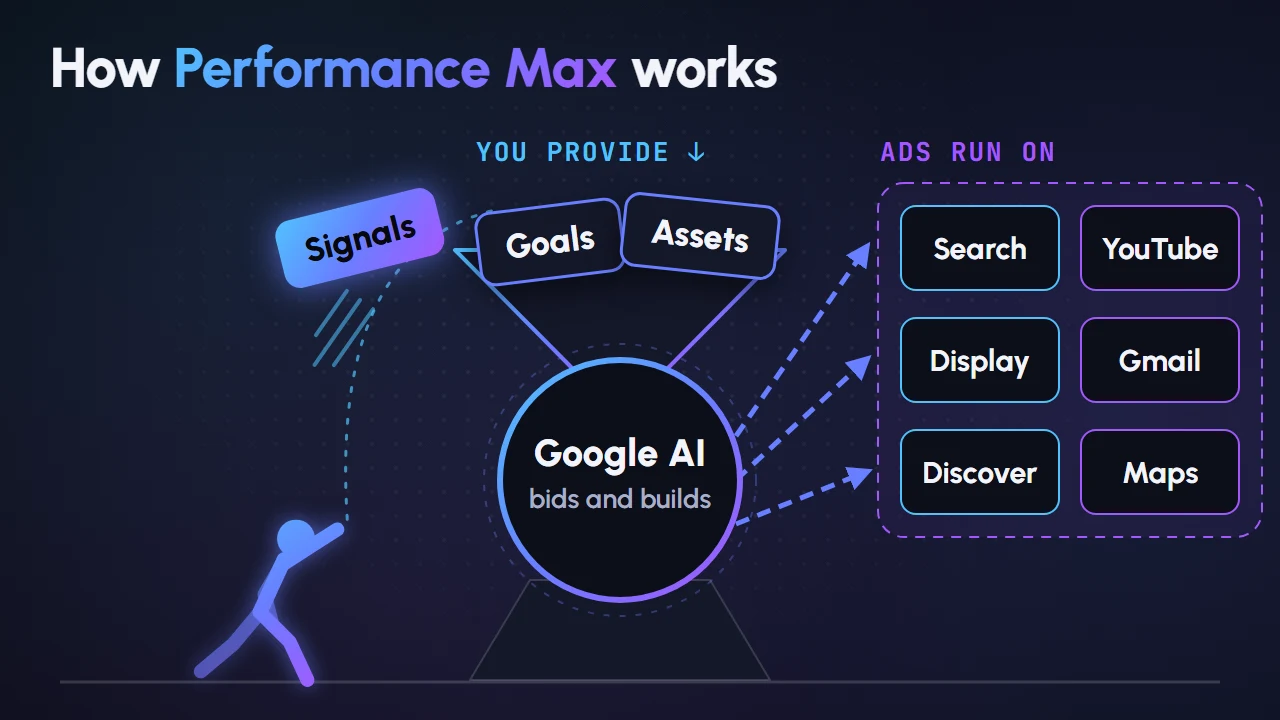
Instead of building separate campaigns for each channel, you give Google:
- a conversion goal, such as leads or online sales
- a budget and a bid strategy
- creative assets: headlines, descriptions, images, logos and videos
- optional audience signals and search themes
Google's AI then decides where to show ads, which asset combinations to use and how much to bid in each auction, based on how likely a conversion is.
The building blocks of a PMax campaign
Conversion goals
PMax optimizes towards the conversions you mark as primary. If those conversions are wrong, PMax will efficiently find more of the wrong thing. Fix tracking first: our guide to Google Ads conversion tracking with GA4 walks through it.
Asset groups
An asset group is a set of creatives built around one theme, product category or audience. Google mixes and matches the assets to build ads for each channel.
Good practice:
- One asset group per clear theme, such as "solar for homes" and "solar for factories", not one group for everything.
- Supply the full range of asset types, including your own videos. If you add no video, Google may generate one from your other assets.
- Write headlines that work on their own, because Google will combine them in different ways.
Audience signals and search themes
Audience signals tell Google who your likely customers are: your customer lists, website visitors, and custom segments based on searches or interests. They are hints, not strict targeting. PMax can show ads to people outside those signals.
Search themes tell PMax which searches are relevant to your business. Google has increased the limit from 25 to 50 search themes per asset group.
Final URL expansion
With final URL expansion turned on, Google may send people to a different page on your website that it thinks is more relevant, and write matching headlines. For lead generation sites, we usually limit this or exclude pages such as blog posts, careers and privacy policy.
New controls and reports in Performance Max
Early PMax was often called a "black box". Google has since added several controls and reports that change how you can manage it.
| Feature | What it does |
|---|---|
| Channel performance report | Shows how results split across Search, YouTube, Display, Discover, Gmail, Maps and search partners |
| Search terms report | Shows the actual searches that triggered your ads |
| Campaign-level negative keywords | Blocks irrelevant searches on Search and Shopping inventory |
| Brand exclusions | Stops ads showing for selected brand searches |
| Device and age controls | Lets you limit which devices and age groups the campaign reaches |
| Asset reporting | Shows conversions, cost and clicks for individual assets |
| New customer acquisition goal | Bids higher for, or only for, new customers |
Channel performance reporting
The channel performance report shows how your campaign delivers across Google's channels, with a performance summary, a chart linking channels to goals, and a channel distribution table. Google has also added time series views so you can see how channels perform over time.
If most of your spend goes to Display but most conversions come from Search, that is a signal to review your assets, goals and whether a separate Search campaign would serve you better.
Search terms and negative keywords
Google now provides search terms reporting for all Performance Max campaigns. Check it weekly in the early weeks.
You can act on it with campaign-level negative keywords, which apply to Search and Shopping inventory. Google raised the limit to 10,000 negative keywords per campaign, and campaign-level negative keyword lists are now available too.
Brand exclusions
Brand exclusions stop your campaign serving on selected brand searches. For PMax, Google says they apply only to Search, Shopping and YouTube search inventory.
This matters because PMax can pick up searches for your own brand name, then take credit for customers who would have found you anyway. Excluding your brand, while running a separate branded Search campaign, gives you a clearer view of what PMax really adds.
New customer acquisition
The new customer acquisition goal lets you bid higher for new customers or target only new customers. Uploading a Customer Match list helps Google tell new and existing customers apart.
When Performance Max is a good fit
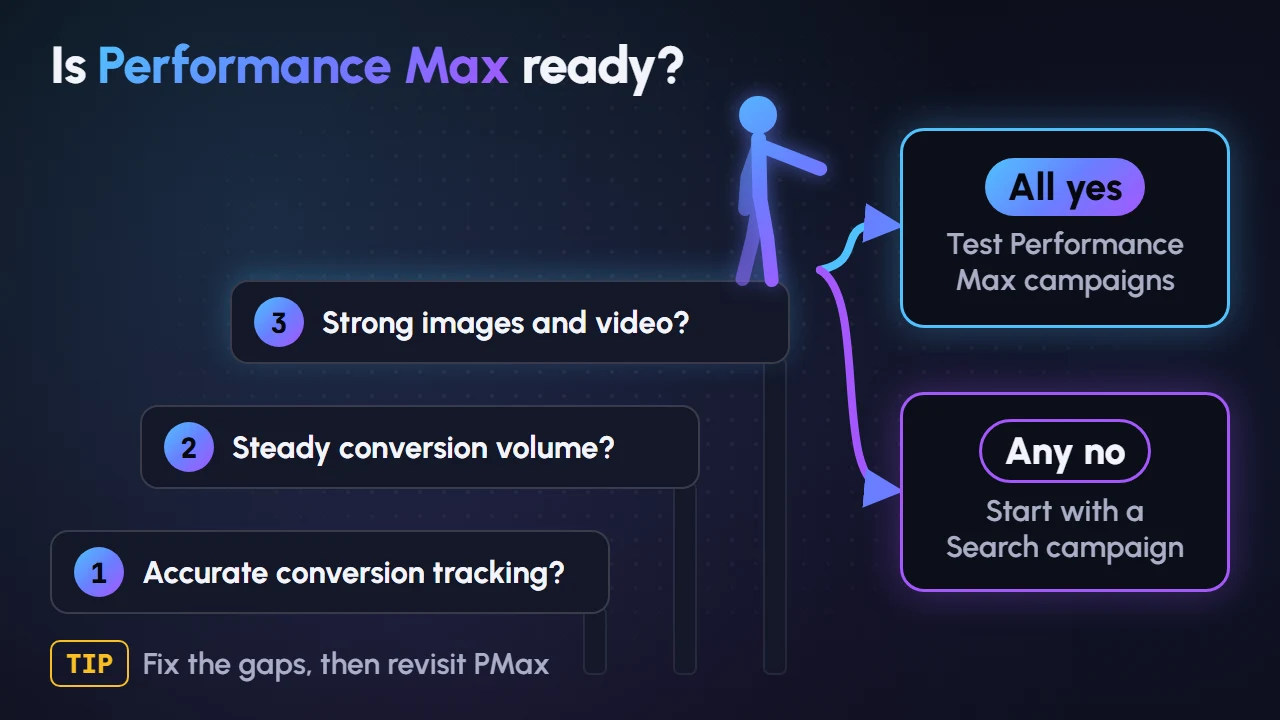
PMax tends to work best when these conditions are true:
- Your conversion tracking is accurate and records real business outcomes, such as purchases or qualified leads.
- You have enough conversion volume for the AI to learn from. A campaign that gets a handful of conversions a month gives it very little to work with.
- You have strong creative assets, including real product photos and short videos.
- You sell online with a product feed. For ecommerce stores, PMax with a Merchant Center feed is often the main way to run Shopping ads.
- You can give it time and a steady budget. Frequent large changes disrupt learning.
When to avoid or delay PMax
Consider starting elsewhere if:
- You are new to Google Ads and have no conversion history. A focused Search campaign teaches you which keywords and offers work. See our Google Ads for beginners guide.
- Your budget is small. PMax spreads budget across many channels, so a small budget may not reach enough people on any of them.
- You only want calls or leads from people searching specific services.
- You cannot supply decent images or video, and do not want Google generating them.
- You need strict control over every placement.
How to launch Performance Max without wasting budget
- Audit conversion goals. Keep only real outcomes as primary conversions.
- Build asset groups by theme. Use your own images and at least one real video.
- Add audience signals. Upload a customer list if you have consent to use it, and add your website visitors.
- Set up exclusions from day one. Add brand exclusions if you run a brand campaign, a starter list of negative keywords, and URL exclusions for irrelevant pages.
- Choose a sensible bid strategy. Start with Maximize conversions or Maximize conversion value, then set a target CPA or ROAS once you have stable data.
- Leave it to learn. Avoid major budget or goal changes in the first couple of weeks.
- Review weekly. Check search terms, channel performance, asset reporting and actual lead quality in your CRM or WhatsApp.
If you also run Meta ads, compare cost per qualified lead across platforms. Our comparison of Meta Ads vs Google Ads explains how to judge them fairly.
Frequently asked questions
Does Performance Max replace Search campaigns?
No. Many accounts run PMax alongside Search campaigns. Search campaigns give you tighter control over keywords and ad copy, especially for your core services and brand name.
Can I see where my PMax ads are shown?
Yes, much more than before. The channel performance report, search terms report and asset reporting show where ads ran and what they achieved.
Is Performance Max good for lead generation?
It can be, if you track qualified leads rather than every form submission. Otherwise PMax may bring in cheap but low-quality leads. Importing lead outcomes from your CRM helps.
How long should I test a PMax campaign?
Give it several weeks with a stable budget before making big decisions, and judge it on business results, not early fluctuations.
Get expert help with Performance Max
Performance Max can scale results quickly when the foundations are right, and waste money quickly when they are not. Our Google Ads management team sets up tracking, asset groups, exclusions and reporting that show where your money actually goes.
Book a free strategy call and we will review whether PMax, Search or a mix of both suits your goals.