
- Google Ads & PPC
- Web Development
Landing Page Best Practices for Lead Generation
Landing page best practices for lead generation: message match, clear offers, short forms, WhatsApp CTAs, speed and testing that turn ad clicks into leads.
 AuthorRehmat Ullah7 min read
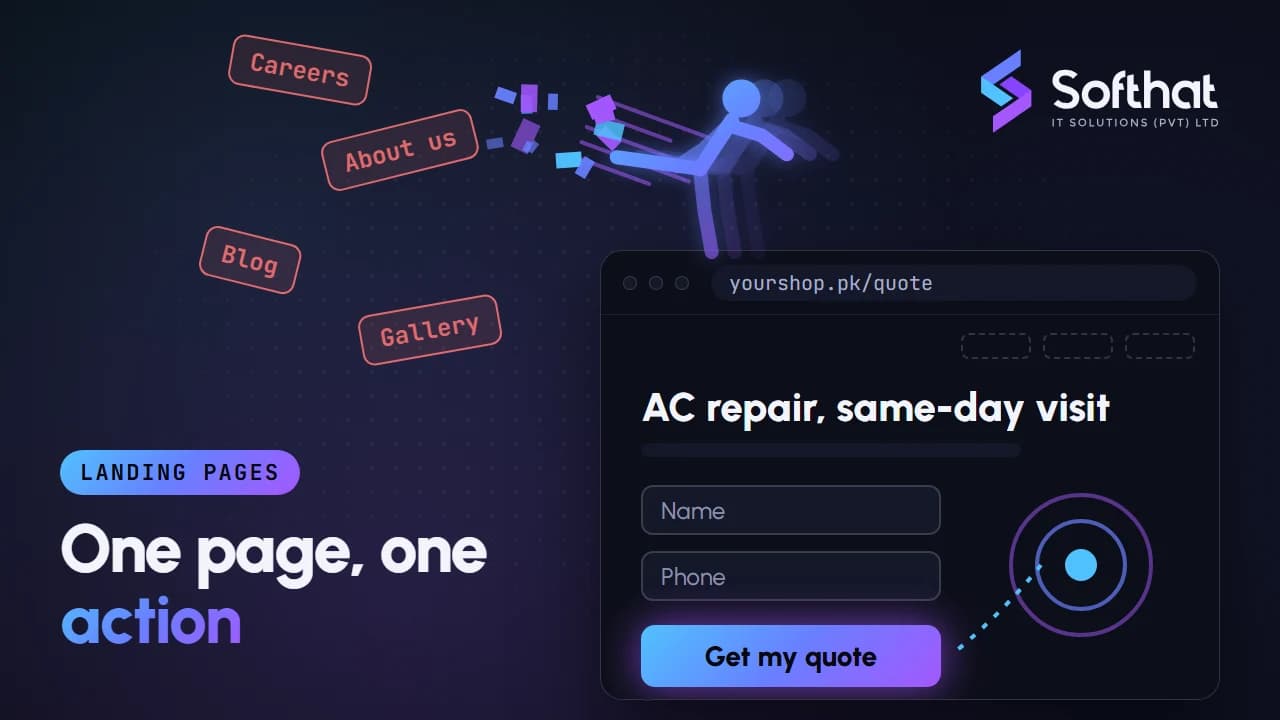
Table of Contents
You can run a well-targeted ad campaign and still lose most of your budget on the page people land on. The ad earns the click. The landing page earns the lead.
A landing page is a single page built for one goal, such as a quote request, a booking or a WhatsApp enquiry. Unlike your home page, it does not try to tell your whole story.
This guide covers landing page best practices for lead generation, from message match and page structure to forms, speed, tracking and testing. It is written for Pakistani businesses running Google Ads, Meta ads or campaigns on WhatsApp, but the principles apply anywhere.
What makes a landing page different from a normal web page
A normal page serves many visitors with many goals. A landing page serves one audience, with one offer and one action.
That focus is the whole point. Every extra link, menu item or competing button gives visitors a reason to leave without converting. For paid traffic, where you pay for every click, that leak costs real money.
Good landing pages share three traits:
- Relevant: they match what the visitor searched for or clicked on.
- Clear: visitors understand the offer within a few seconds.
- Easy: taking the next step takes little effort.
If you are new to paid ads, start with our Google Ads guide for beginners, then come back to build the page.
Best practice 1: match the ad message exactly
Message match means your landing page repeats the promise your ad made. If the ad says "AC repair in Lahore, same-day visit", the headline should say the same thing, not "Welcome to our company".
Google recommends this directly. Its advice on optimizing ads and landing pages says to "choose a landing page that closely matches your ad and keywords."
Relevance also affects what you pay. Landing page experience is one of the three components Google uses to diagnose Quality Score, alongside expected clickthrough rate and ad relevance. Google notes that Quality Score itself is a diagnostic tool, but real-time versions of these components are used in the ad auction.
Practical steps:
- Create separate landing pages, or at least separate headlines, for each major service or ad group.
- Use the same keywords and offer wording as the ad.
- Keep location, price hints and promotions consistent between ad and page.
Best practice 2: structure the page around one goal
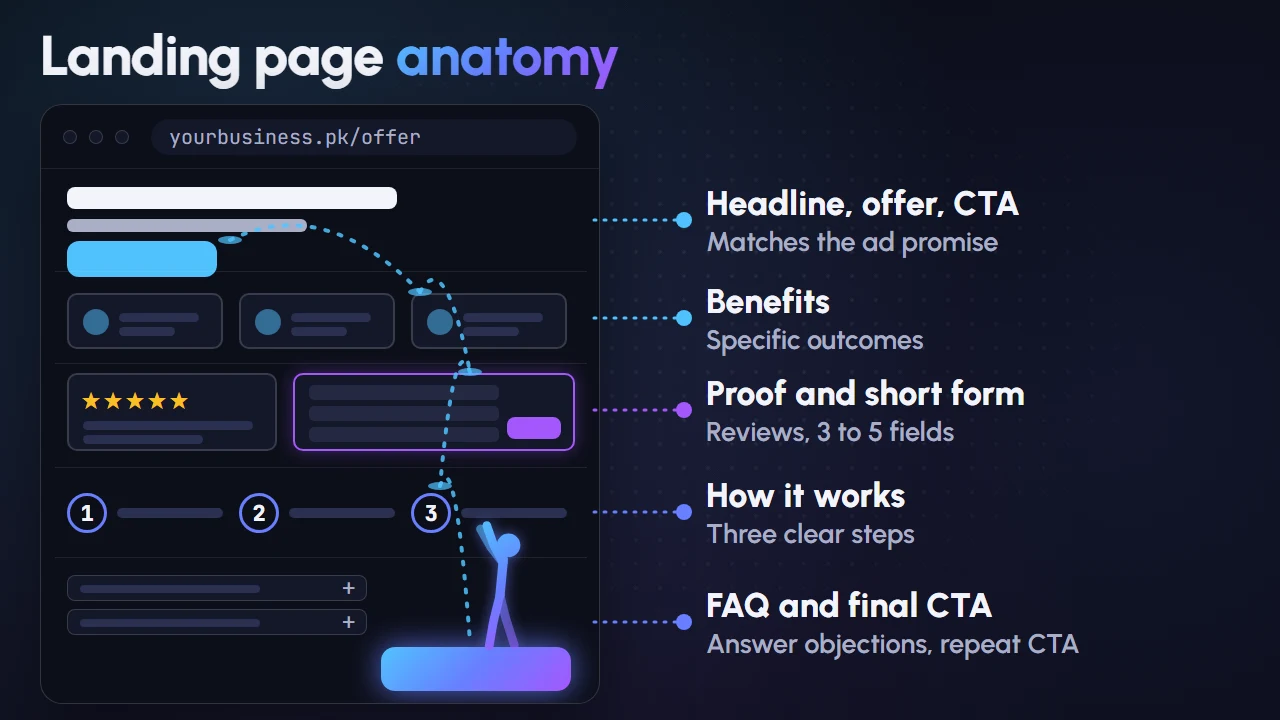
A reliable structure, from top to bottom:
- Headline: the outcome the visitor wants, in their words.
- Subheadline: how you deliver it and for whom.
- Primary call to action (CTA): a button or short form visible without scrolling on mobile.
- Benefits: three to five concrete outcomes, not a feature dump.
- Proof: reviews, client logos, certifications, before-and-after photos or project examples you can verify.
- How it works: a simple three-step process that removes uncertainty.
- FAQ: answers to price, timing and trust objections.
- Final CTA: repeat the action at the bottom.
Google's guidance also recommends putting important information near the top of the page and making it "quick and easy for customers to perform the action you want them to take."
Remove distractions
- Hide or simplify the main site navigation.
- Remove links to unrelated blog posts and social profiles.
- Use one CTA label throughout, such as "Get a free quote".
Best practice 3: write copy that answers the visitor's questions
People arriving from an ad are asking four questions: Is this what I was looking for? Can I trust them? What will it cost me in money, time or effort? What happens next?
Write to answer those, in plain language:
- Lead with benefits: "Solar installed in 5 working days" beats "Premium solar solutions".
- Use numbers you can back up, such as years in business, warranty length or response time.
- Explain what happens after they submit: "We call you within one working day to confirm details."
- Consider Urdu or Roman Urdu for audiences who prefer it, and test it against English.
Our guide to writing website copy that converts goes deeper into headlines and CTAs.
Best practice 4: design forms and CTAs for Pakistani users
Keep forms short
Every field adds friction. For most lead generation pages, name, phone number and one qualifying question (such as service needed or city) are enough. Ask for more on the follow-up call.
- Label every field clearly, above the input, not only as placeholder text.
- Use the right input types so phones show a numeric keypad for phone numbers.
- Show friendly error messages that explain how to fix the problem.
- Add a short privacy note on how you will use their details.
Offer WhatsApp as a CTA
Many customers find it easier to send a message than to fill in a form. A WhatsApp button using a click-to-chat link opens a chat with your business number, and you can pre-fill a message such as "Hi, I'd like a quote for AC servicing."
Track WhatsApp clicks as a separate conversion so you can compare them with form leads. Make sure someone actually replies quickly, or the extra leads will go to waste.
Make the CTA obvious
- Use a high-contrast button with a specific label.
- Make buttons large enough to tap easily on a phone.
- Add a click-to-call option for urgent services.
Best practice 5: make it fast and mobile-first
Many visitors from social and search ads arrive on phones, often on mobile data. A slow page loses them before they see your offer.
Google's Core Web Vitals give clear targets, measured at the 75th percentile of page loads:
| Metric | What it measures | Good threshold |
|---|---|---|
| Largest Contentful Paint (LCP) | Loading speed of main content | 2.5 seconds or less |
| Interaction to Next Paint (INP) | Responsiveness to taps and clicks | 200 milliseconds or less |
| Cumulative Layout Shift (CLS) | Visual stability | 0.1 or less |
Quick wins for landing pages:
- Compress images and serve modern formats such as WebP.
- Avoid heavy sliders, auto-playing videos and unnecessary scripts.
- Load chat widgets and tracking tags efficiently.
- Reserve space for images and embeds so the layout does not jump.
If your page feels sluggish when people tap buttons, read our guide to fixing Interaction to Next Paint.
Best practice 6: track every lead and test changes
You cannot improve what you do not measure. Before launching ads, set up tracking for each lead action:
- Form submissions (ideally on a thank-you page or confirmed submission event)
- WhatsApp button clicks
- Phone number clicks
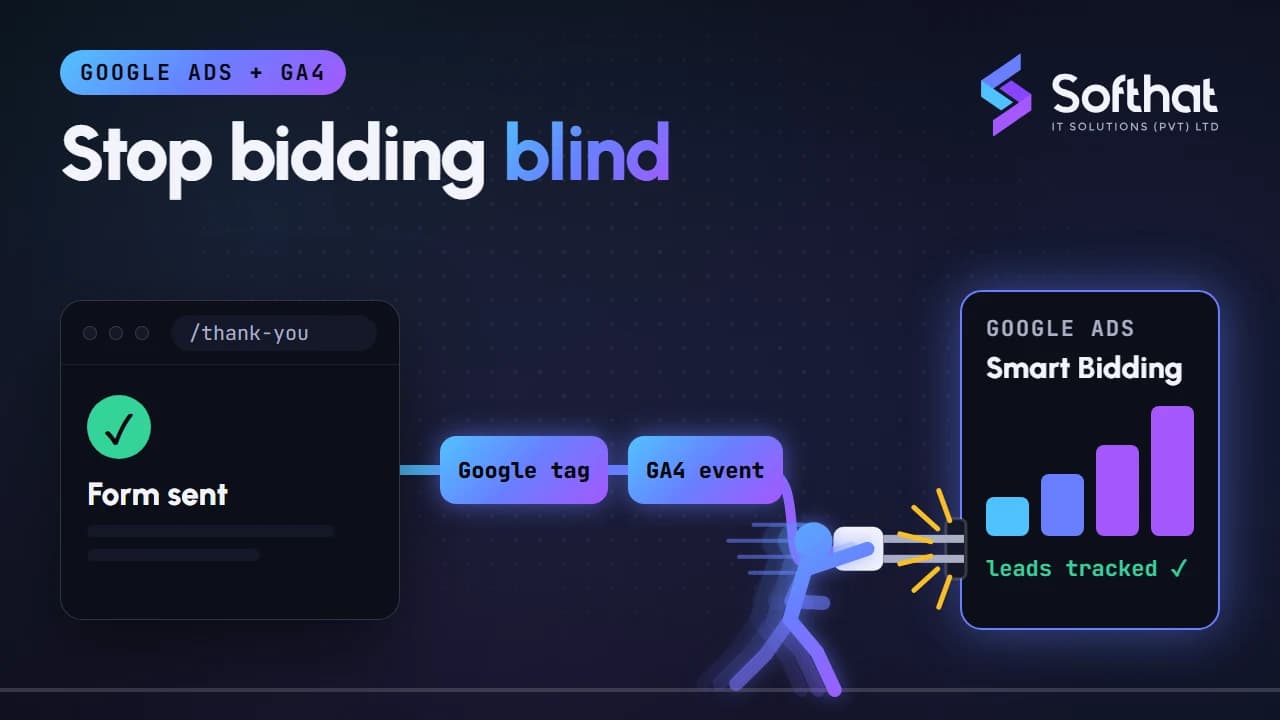
In GA4, important actions are now called key events, and you can create Google Ads conversions from them. Our walkthrough on Google Ads conversion tracking with GA4 covers the setup.
Test one change at a time
Once leads are coming in, run simple A/B tests. Change one element, such as the headline, form length or CTA label, and compare results over enough traffic to be meaningful. Low-traffic pages need longer tests, so start with changes likely to have a big effect.
Also measure lead quality, not just volume. A shorter form may bring more leads but fewer real buyers. Ask your sales team which leads turn into customers.
Landing page checklist and FAQ
Pre-launch checklist
Use this before you send paid traffic to any page:
- Headline matches the ad's promise and keywords
- Offer and CTA visible without scrolling on mobile
- One goal, with navigation and distractions removed
- Benefits are specific and verifiable
- Real reviews, examples or credentials included
- Form has three to five fields, with visible labels
- WhatsApp and call options for mobile users
- LCP, INP and CLS within "good" thresholds
- Form, WhatsApp and call conversions tracked and tested
- Thank-you page or message explains what happens next
Should I send ad traffic to my home page?
Usually not. A home page serves many audiences and has many exits. A dedicated landing page that matches the ad generally gives visitors a clearer path to act.
How long should a landing page be?
As long as it needs to be to answer the visitor's questions. A simple, low-cost service can convert with a short page. Higher-value or complex services often need more proof and FAQs.
Do landing pages help SEO?
Paid landing pages are often set to noindex to avoid thin or duplicate pages in search. Service pages built for organic search can follow the same principles while carrying more in-depth content.
How many landing pages do I need?
Start with one per main service or offer you advertise. Add more when you target clearly different audiences, cities or languages.
Build landing pages that convert
A strong landing page makes every rupee of ad spend work harder. If you want pages built for speed, tracking and conversions, our web development team can design and build them, and our Google Ads management team can connect them to campaigns.
Book a free strategy call and we will review your current landing page and ads together.